
Short answer
Capillary rise is the migration of moisture through the building fabric. It can cause salt deposits, a damp tide mark, and damage to finishes. Before any treatment, the cause must be confirmed through a diagnosis.
What is capillary rise?
Capillary rise is the migration of water through the porous materials of a wall, from its base upward along the surface. Water present in the ground or at the foot of the building moves through the pores of the materials, much like liquid rising through a sponge or a sugar cube.
This water does not remain neutral: it carries salts present in the ground and in the materials. As it reaches the surface area, the water evaporates and leaves those salts behind. This is one of the mechanisms that explains the appearance of salt deposits and damp tide marks at the base of walls.
What visible signs should you look for?
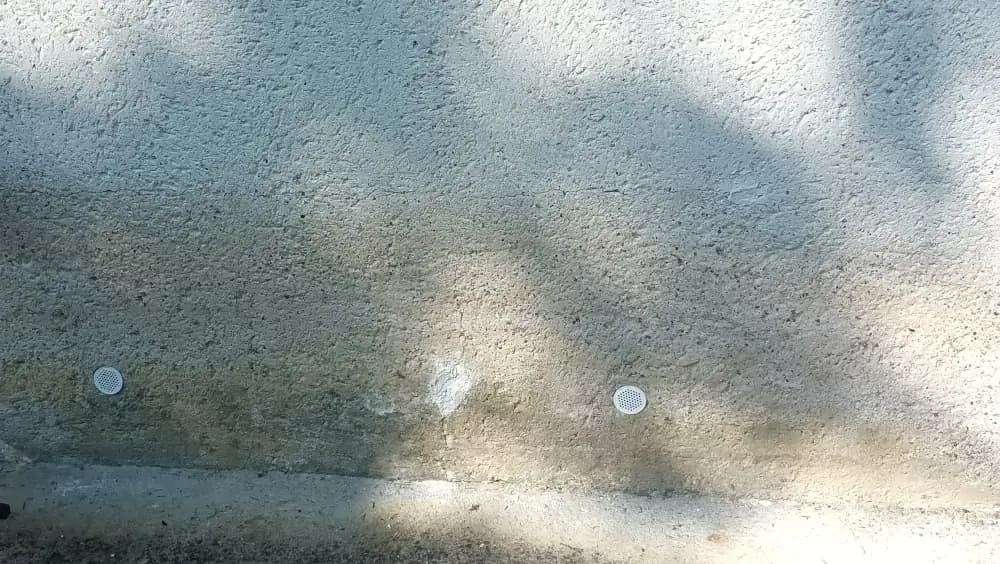
The most common signs are concentrated at the bottom of walls, where moisture migrates and then evaporates. Their height can vary depending on the building, the materials, and the season.
It is useful to compare these signs with the building context rather than drawing conclusions from a single clue.
- Damp tide mark or white line at the base of the wall
- Salt deposits (white, powdery residue)
- Render that crumbles or comes away
- Paint that blisters or flakes
- Wallpaper coming unstuck
Does the damp keep coming back?
A fresh coat of paint will not stop water moving through a wall. MURSAIN finds the cause and uses the treatment that fits the building, dealing with the problem at its source.
Difference between capillary rise, infiltration and condensation
Not every damp wall is caused by capillary rise. Three major families of causes can produce similar effects and need to be distinguished.
Capillary rise starts from the bottom of the wall and moves upward. Infiltration usually comes from lateral or localized water entry (facade, roof, pipework) and may affect higher or more localized areas. Condensation, by contrast, is linked to moisture in the air and often appears high on walls, in corners, or behind furniture.
A single building can combine several of these causes, which makes diagnosis all the more important.
Why salt deposits often accompany the phenomenon
In MURSAIN terminology, salt deposits are associated with hygroscopic salts carried by rising damp. When the water evaporates near the surface, these salts are left behind and form a white film, powder, or line.
Cleaning the surface may improve the wall's appearance, but if water continues to migrate, the deposits can return. That is why treating the cause takes priority over treating the effect.
What a diagnosis needs to check
Before considering any treatment, a diagnosis aims to confirm the origin of the moisture and rule out other possible causes.
The location and height of the marks, how they change over time, the nature of the materials, the construction period, and the building history (water damage, recent works) are all useful elements. Dated photos and a precise description of the visible issues help prepare this assessment.
Possible treatments and their limits
Surface products (paints, so-called anti-damp renders) do not act on the migration of water through the building fabric: they can hide an effect without treating the cause.
Treatment for rising damp is aimed precisely at this water migration. Whether it is appropriate depends on the diagnosis: each situation is assessed individually, and MURSAIN does not present any universal solution or automatic result.
How MURSAIN positions its process
The MURSAIN process is the solution presented for treating rising damp when it matches the building's case. It is passive and autonomous, based on applied physics, and installed after the causes have been analyzed.
The priority remains confirming the origin of the issue: the MURSAIN process is considered when the analysis points to rising damp that needs treatment, not as a systematic answer to every damp wall.
Frequently asked questions
Does the MURSAIN process treat every case of capillary rise?
The MURSAIN process is offered for rising damp after the building has been analyzed. Each situation is assessed individually, and whether the solution is relevant depends on the diagnosis.
Can capillary rise be treated on your own?
Surface products do not treat the migration of water through the building fabric. A diagnosis is necessary before any intervention to confirm the cause.
How can you tell capillary rise from infiltration?
Capillary rise starts from the bottom of the wall and moves upward, whereas infiltration usually comes from lateral or localized water entry. The location of the marks and the building history help distinguish them, but a diagnosis is still necessary.
Continue your journey
See the diagnostic method, treatment options and MURSAIN process installation.
Causes and effects of moisture →Distinguish the three main causes before treating.
Home damp diagnosis →Prepare a diagnosis request.
Salt deposits: causes, risks, what to do →The most visible sign of rising damp.