
Short answer
Saltpeter is linked to salts carried by moisture. The right response is to look for the source of the water before cleaning, plastering, or repainting.
A clear definition of saltpeter
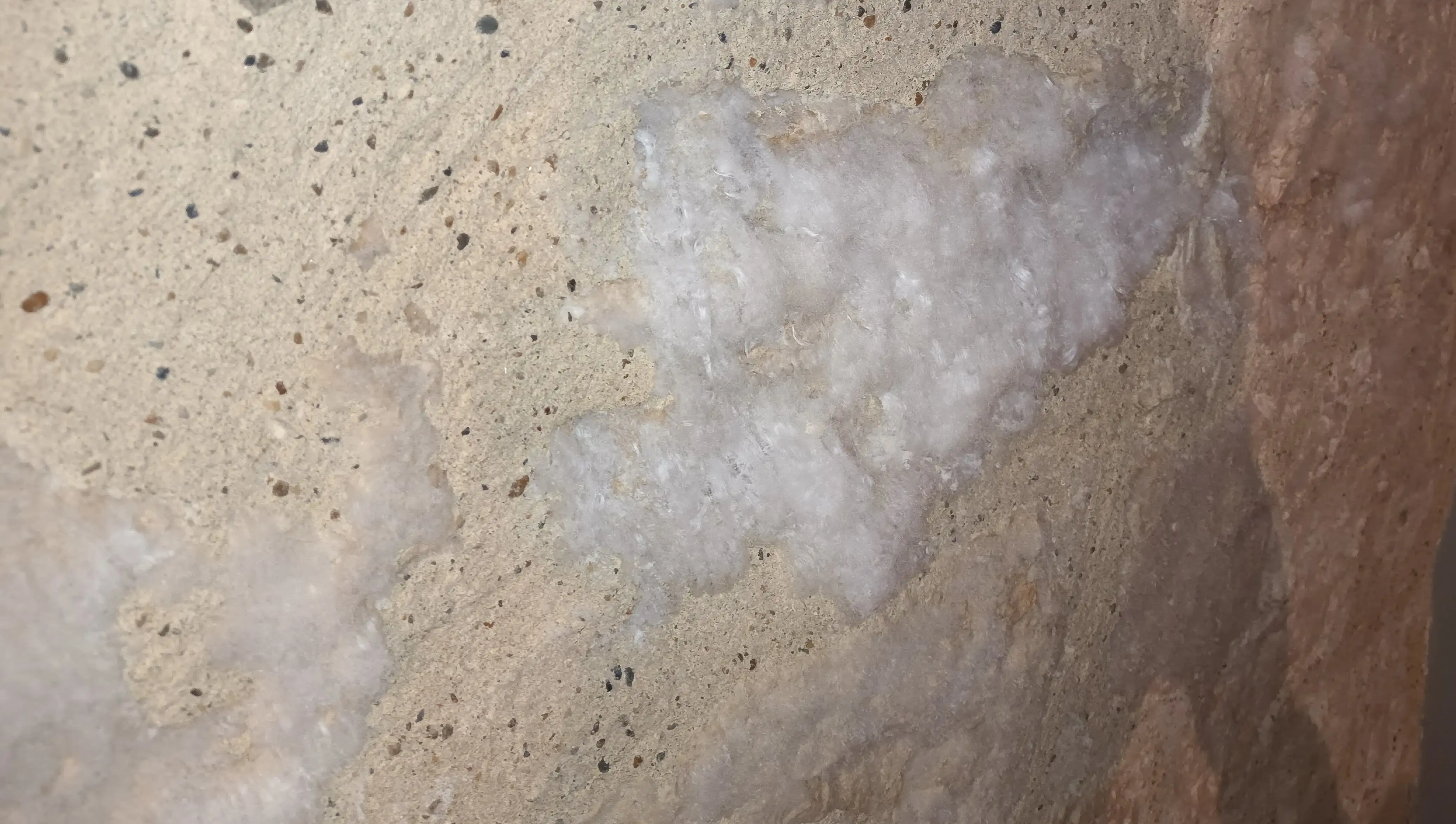
Contrary to common belief, saltpeter is neither a fungus nor a stone disease. In MURSAIN's vocabulary, it is associated with hygroscopic salts carried by rising damp, which are deposited near the surface when the water evaporates.
It appears as white, powdery, or crystalline deposits, sometimes as a film or a border. Its presence is above all a signal: it indicates that the source of the moisture must be investigated, not just the visible mark cleaned.
- White or powdery deposits
- Film or crystals on the surface
- Damp border at the foot of the wall
Where it appears
Saltpeter most often concentrates at the bottom of walls, where moisture migrates and then evaporates. It is frequently found around skirting boards, on older walls, and in cellars and basements.
Its height and extent may vary depending on the building, the materials, and the season. Observing how it changes over time provides useful clues.
Does the damp keep coming back?
A fresh coat of paint will not stop water moving through a wall. MURSAIN finds the cause and uses the treatment that fits the building, dealing with the problem at its source.
Likely causes
Rising damp is a common cause when the deposits are located at the foot of the wall or accompany a damp band.
But old water damage, infiltration, or sustained moisture may also be involved. The same visible effect may have several origins: the cause must be confirmed by an analysis of the building and the observed defects.
What it can damage in the building
Salts and water evaporation can contribute to crumbling plaster, peeling wallpaper, and flaking paint.
These forms of damage first affect the finishes, but they signal an imbalance in the wall that is better understood before it spreads.
Cleaning or treatment?
Brushing, washing, or painting can remove or hide the mark. They do not act on the cause if water continues to circulate in the wall, and the deposits may reappear.
Treatment, by contrast, targets the source of the moisture. That is the difference between improving appearance in the short term and resolving the imbalance more durably.
When the MURSAIN process may be an option
When the analysis confirms rising damp, the MURSAIN process may be considered after diagnosis: it is a passive, autonomous process installed by MURSAIN that treats rising damp.
The MURSAIN process is not a systematic response to saltpeter: if another cause dominates, another solution may be more suitable. The priority remains confirming the origin of the issue.
Frequently asked questions
Is saltpeter a fungus?
No. Saltpeter is neither a fungus nor a stone disease: it consists of salts carried by moisture that deposit on the surface.
Can you paint over a wall with saltpeter?
Repainting without identifying and treating the cause exposes you to a quick recurrence of the deposits.
Does saltpeter always indicate rising damp?
It is an important clue, but the cause must be confirmed by an analysis of the building and the observed defects.