
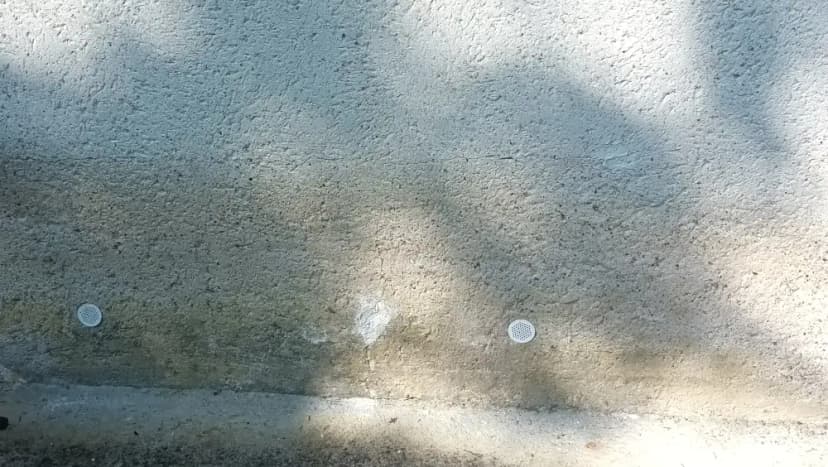
Cause: rising damp
The bottom of the walls
Saltpetre, damp band, crumbling render, flaking paint. Water from the ground rises into the wall by capillary action.
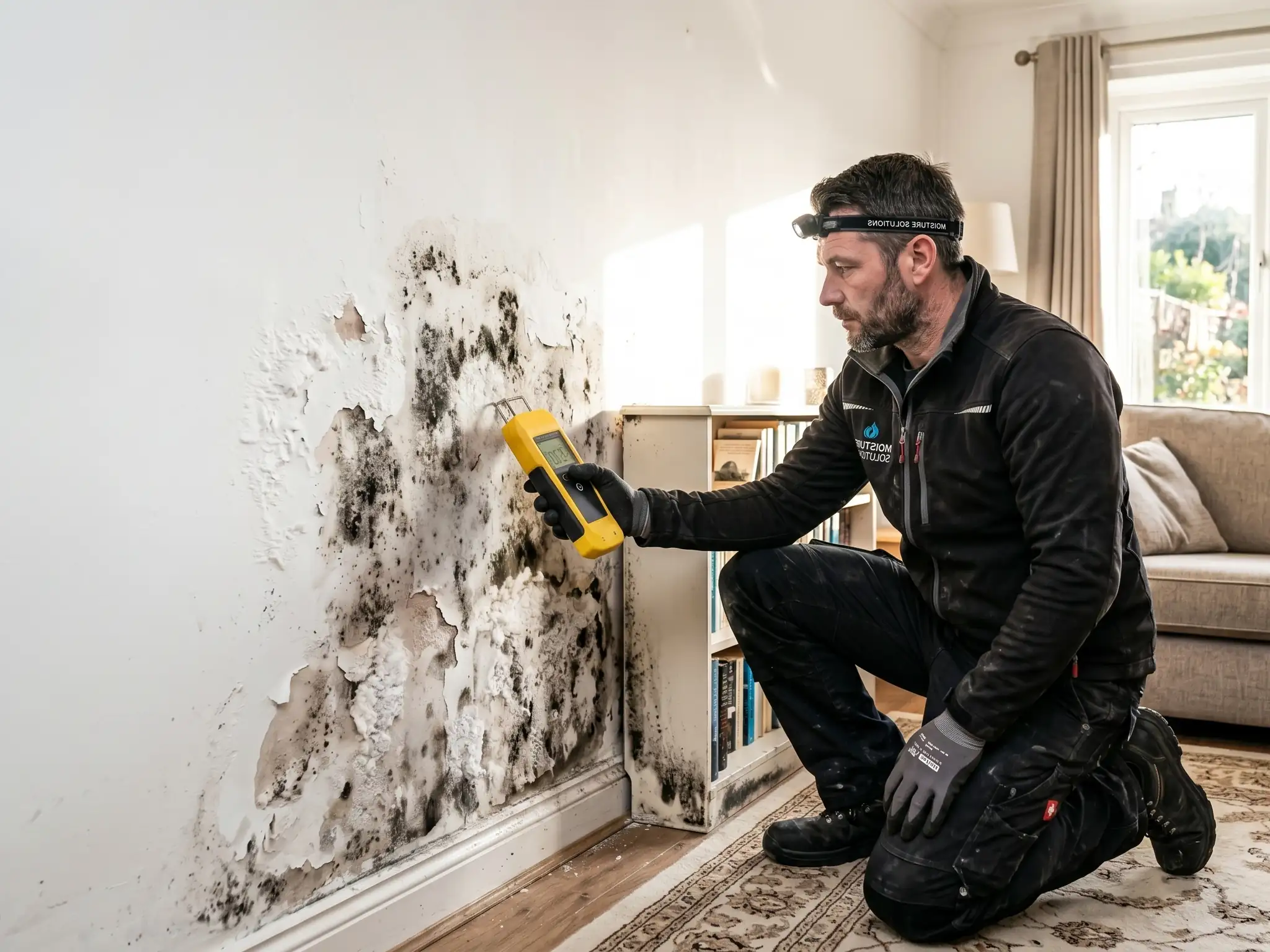
Moisture diagnosis
Saltpetre, mould, peeling wallpaper, flaking paint, a damp band or water damage: the same symptom can have several causes. MURSAIN always starts by analysing the origin.
In brief
A moisture diagnosis is used to identify the cause before treating. Building moisture comes down to three main causes: rising damp, condensation and water damage. The same symptom can be due to several causes. MURSAIN carries out a remote diagnosis from your photos, then an on-site study if necessary.
Observation is the starting point. Depending on what you see, the moisture points toward a cause and therefore toward a specific treatment.
Cause: rising damp
Saltpetre, damp band, crumbling render, flaking paint. Water from the ground rises into the wall by capillary action.
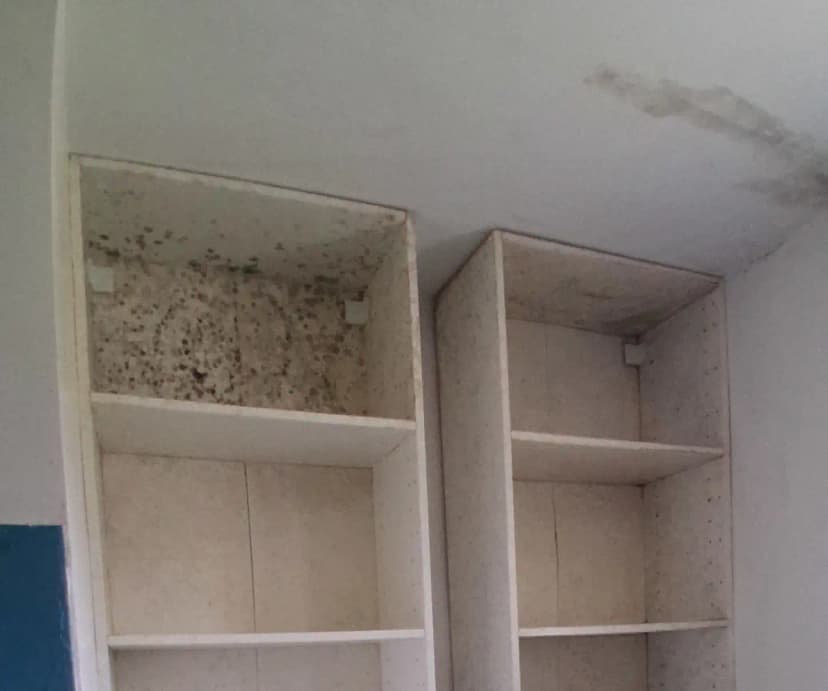
Cause: condensation
Grey / black mould high on walls, in corners, behind furniture or in cupboards, condensation on windows, odours. Often linked to poor ventilation.
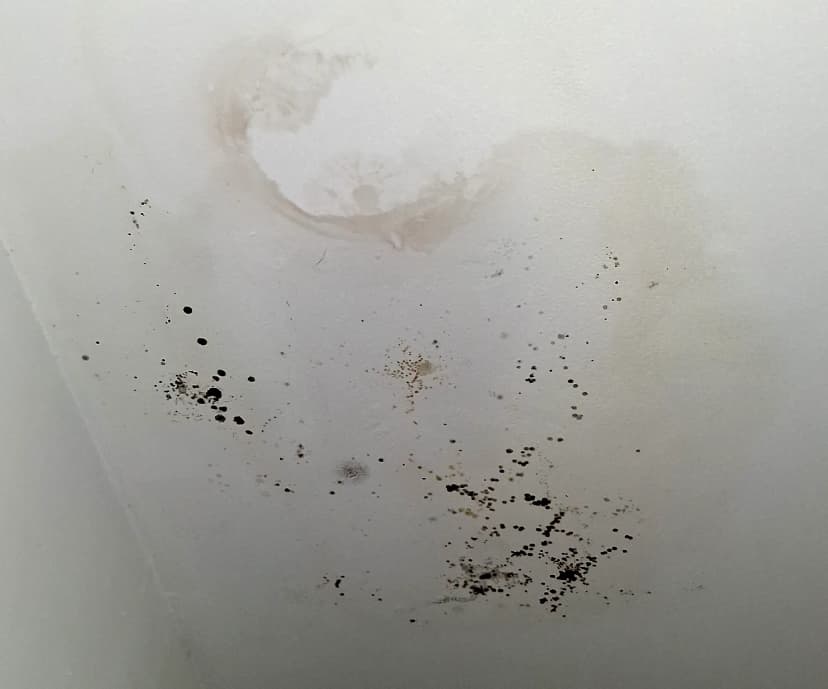
Cause: water damage
Saturated structure after a leak, overflow or infiltration. Walls and floors remain full of water deep down, far beyond the surface appearance.
Treating without diagnosis
Diagnosis first, by MURSAIN
The diagnosis reads the symptoms you describe and places them back in the context of the building: materials, construction period, exposure, ventilation and history of the issues.
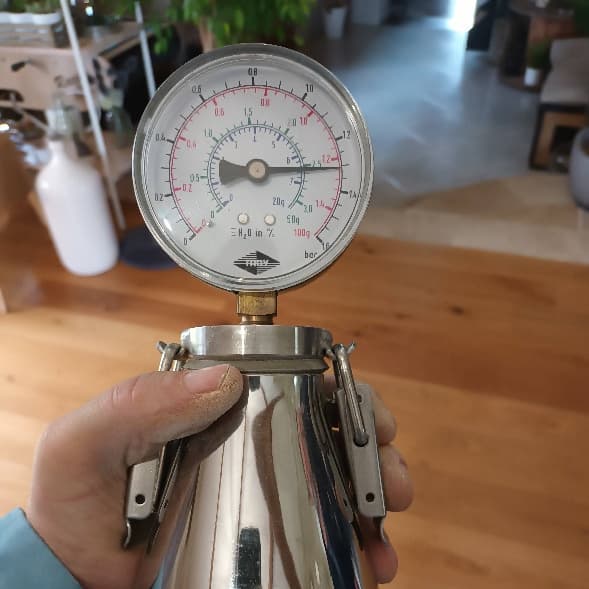
The on-site study goes further: measuring the humidity level in the materials is more reliable than surface appearance. A wall can seem dry while remaining saturated deep down.
The more precise your request, the more useful the diagnosis. Ideally gather the following before writing to us.
Key point
We use the term diagnosis because it is done remotely. The on-site study is carried out according to the context and the information provided.
Your file in 5 points
Photos, municipality, construction period, observed issues and history of any water damage.
MURSAIN carries out an initial reading of the causes from the information provided.
Feedback is given to propose the suitable path, before any possible on-site study.
It is the analysis of the causes of a moisture issue before any treatment. Building moisture comes down to three main causes: rising damp, condensation and water damage. The same visible effect can have several causes, and several causes can coexist in one building. The diagnosis helps separate them so the right one is treated.
The diagnosis is a first analysis carried out remotely from your photos and the information provided. It quickly qualifies the most likely path. The on-site study is carried out when necessary: a technician then measures the moisture levels in the materials and confirms the origin of the issue.
General and close-up photos of the affected areas, the municipality, the type and period of construction if known, the affected rooms, the observed issues and their history: leak, water damage, recent works and seasonal changes.
As soon as you notice signs of moisture: saltpetre, damp band, flaking paint, peeling wallpaper, crumbling plaster or persistent mould. It is also advisable before buying an older building, even without visible signs.
No. The remote diagnosis guides the process, but the on-site study relies on measurements in the materials and observation of the building context. That is what confirms the cause.
Understand the three major causes and their visible effects.
Rising damp →The MURSAIN process and what it addresses.
Air treatment →When the moisture comes from the air rather than the walls.
Dehumidifier advice →Choose the right device or understand when it is not enough.
Next step
Send your photos, municipality and the observed issues. MURSAIN carries out an initial analysis before proposing the suitable solution.
Treat the source so the damp does not keep coming back.