
Short answer
The diagnosis brings together the symptoms, the building context, and the first hypotheses remotely. The full diagnosis is carried out on site when necessary. This step avoids automatic solutions and premature renovation work.
Remote diagnosis or on-site diagnosis?
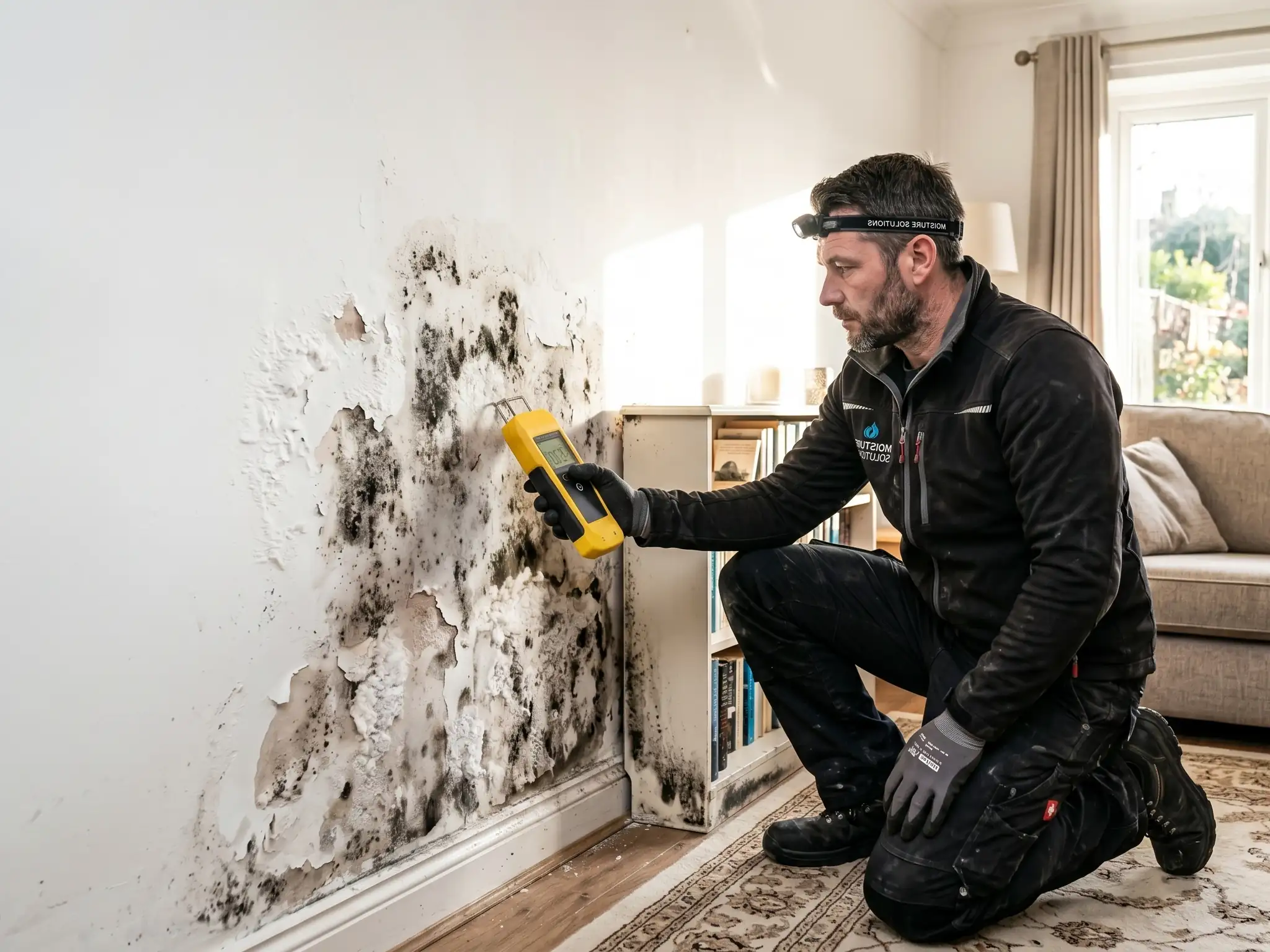
The diagnosis is an initial reading based on the information and photos you send. It helps qualify the request, guide the hypotheses, and avoid covering up a problem without knowing its origin.
The full diagnosis, by contrast, is performed on site when the situation requires it. It relies on observations and measurements that cannot be obtained remotely. The MURSAIN website uses the term diagnosis precisely to avoid suggesting that a definitive diagnosis can be made online.
Information to send
The more precise the request, the more useful the first reading becomes.
These elements help qualify the request before a more complete discussion.
- Town and type of building
- Construction period if known
- Rooms affected and height of the visible issues
- Observed issues: salt deposits, mold, damp tide mark, damaged finish
- History: leak, water damage, recent work, seasonal changes
Does the damp keep coming back?
A fresh coat of paint will not stop water moving through a wall. MURSAIN finds the cause and uses the treatment that fits the building, dealing with the problem at its source.
Useful photos
Photos are often the most telling part of a remote request. Plan for general views to place the issue in the room, and close-ups to show texture (powder, blistering, white line).
A size reference (ruler, skirting board) helps assess the height of the marks. Dated photos taken at different times can also show whether the problem is changing.
What MURSAIN aims to distinguish
The goal is not to name a solution immediately, but to separate the possible causes. MURSAIN distinguishes three major families: rising damp, condensation, and water damage.
The same visible sign can have several origins, and several causes can coexist in one building. Diagnosis therefore helps avoid confusing air treatment, one-off drying, and rising damp treatment.
Why price or quotation depends on the cause
Giving a price before knowing the cause can be misleading. The appropriate solution (rising damp treatment, air treatment, drying after water damage) does not have the same nature or scope depending on the diagnosis.
That is why a precise quotation follows the analysis rather than coming before it. The diagnosis is what determines what needs to be priced.
When to bring someone in before a sale, renovation, or claim
A clear opinion on moisture is often useful at a specific moment: before selling a property, before decorative renovation work, or after water damage.
Intervening early helps avoid redoing work that deteriorates too quickly and creates a clear file for the professionals involved (notaries, insurers, contractors, property managers, architects).
Frequently asked questions
Is the quote free?
Yes. MURSAIN reviews the initial details of your request free of charge in order to prepare a quote. If a paid on-site study is needed to confirm the cause and size a permanent solution, MURSAIN tells you in advance.
What information should be prepared before a diagnosis?
General and close-up photos, the town, construction period, and a description of the visible issues are the most useful elements.
Can a diagnosis be made from photos alone?
Photos allow a remote diagnosis, but a full diagnosis often requires an on-site visit to observe and measure what cannot be seen in an image.