
Short answer
The treatment for a damp wall depends on its origin: rising damp, condensation, water damage, or a combination of causes. There is no single treatment: the cause must be identified before the solution.
Why there is no single treatment
A damp wall is a symptom, not a cause. The same visible mark can hide very different origins, which do not call for the same response.
Applying a single recipe (paint, render, device) without understanding the origin exposes you to recurrence and repeated work. That is why MURSAIN starts with advice and cause analysis before proposing the appropriate solution or solutions for each building.
Symptom, possible causes, page to read
The table below links the most common symptoms to possible causes and the corresponding guide. It helps with orientation, but does not replace a full diagnosis.
- Damp band / salt deposits at the base of a wall -> rising damp -> see "Capillary rise"
- Condensation, mold in corners -> condensation -> see "Condensation in a house"
- Marks after a leak -> water damage -> see "Water damage"
- Peeling wallpaper, flaking paint -> evaporation inside the wall -> see the symptom guides
- Several signs at the same time -> combined causes -> diagnosis recommended
Does the damp keep coming back?
A fresh coat of paint will not stop water moving through a wall. MURSAIN finds the cause and uses the treatment that fits the building, dealing with the problem at its source.
Treatment for rising damp
When the analysis points to rising damp, MURSAIN offers its own process, based on applied physics, passive and autonomous, installed after diagnosis.
Surface products do not act on water migration within the building: they can hide an effect without treating the cause. The relevance of the MURSAIN process depends on the specific building case and is never presented as a universal solution.
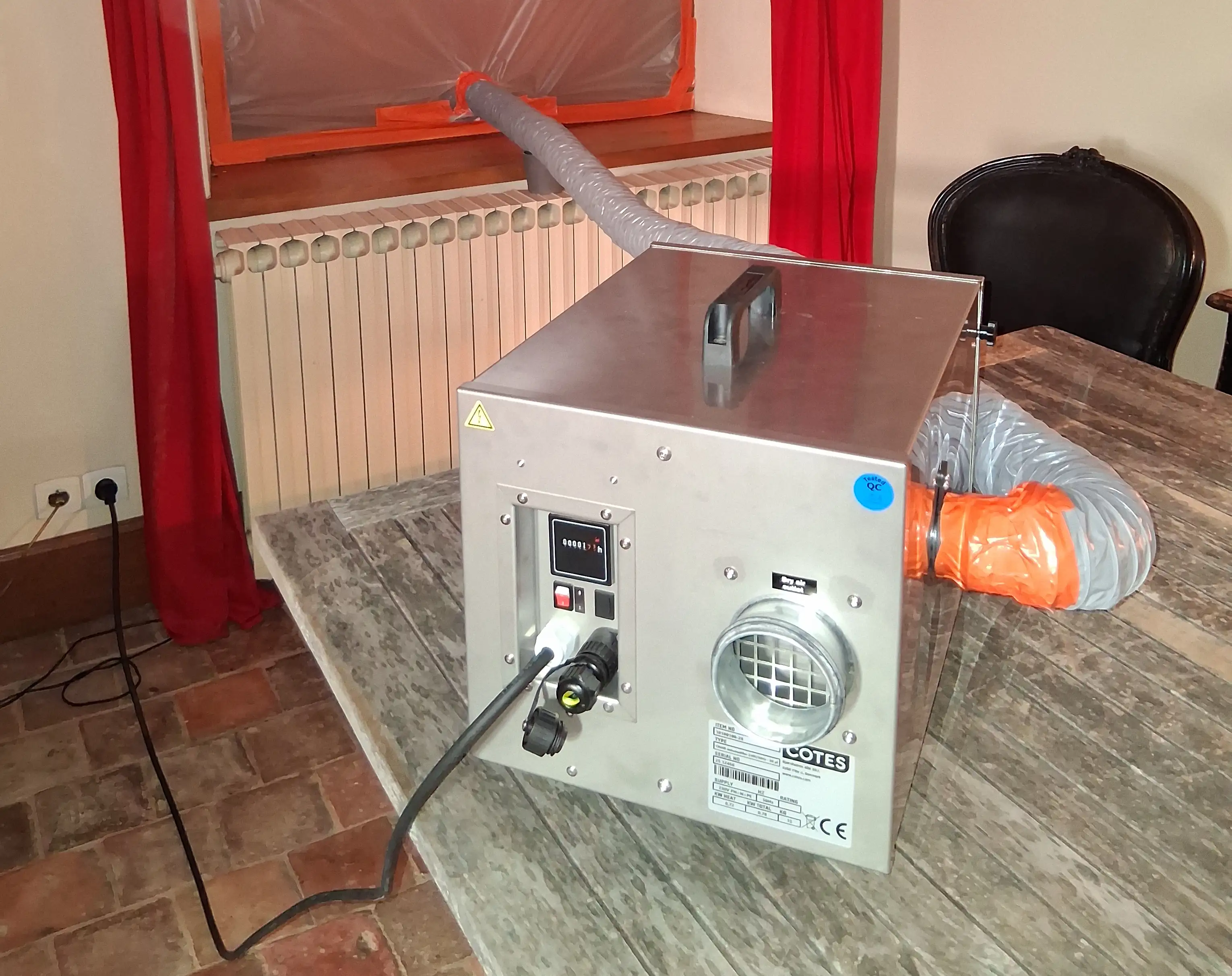
Air treatment
When humidity mainly comes from the air (condensation, insufficient ventilation), air treatment aims to control the moisture contained in the indoor air.
It can concern a home, a basement, a commercial space, or a sensitive environment, and is sometimes combined with other responses depending on the diagnosis.
Drying after water damage
After water damage, structures can remain saturated even once the leak has been repaired. Drying addresses this temporary saturation of the materials.
Checking and measuring drying before decorative work avoids starting again on a support that is still damp.
Decorative work: when to do it
Render, paint, and wallpaper should come after treating the cause and drying the support, not before.
Redoing decoration too early exposes you to seeing the damage reappear. The right sequence is: understand the cause, treat it, dry, then decorate.
Frequently asked questions
Is there a universal treatment for damp walls?
No. The solution depends on the cause: rising damp, condensation, and water damage do not involve the same treatments.
How long does a rising damp treatment take?
The duration depends on the building, the materials, and the extent of the problem. MURSAIN specifies the steps after the diagnosis.
Can you simply repaint a damp wall?
Repainting without treating the cause and drying the support exposes you to recurrence. The source of the damp must first be identified.